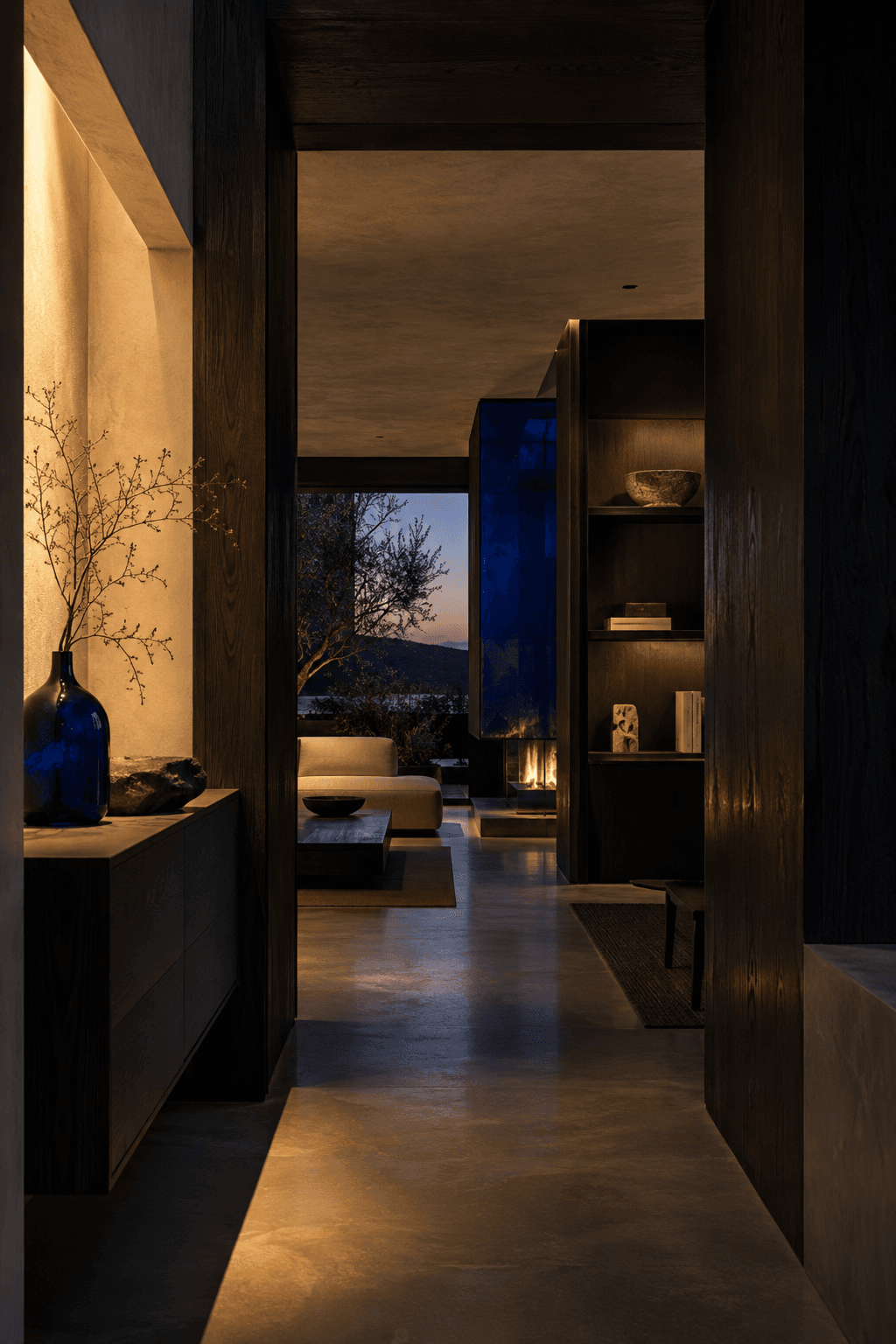
A high-end client is not only deciding whether the work looks beautiful. They are trying to understand judgement, discretion, relevance and whether the studio can carry a complex project with confidence. The website should make that assessment easier without turning a considered practice into a loud sales presentation.
A CLEAR POINT OF VIEW
Strong imagery earns attention, but a recognisable point of view creates memory. The opening should help a visitor understand what the studio notices, values and does differently. This does not require a grand claim. A precise statement, disciplined edit and consistent visual rhythm can say more than a list of generic qualities such as timeless, bespoke and luxurious.
RELEVANT PROOF
Prospective clients look for work that helps them imagine the studio in the context of their own project. That may mean residential scale, hospitality experience, listed buildings, international coordination or a particular material sensibility. Curate projects around the work the practice wants next, and explain enough context for the visitor to understand why each example matters.
JUDGEMENT, NOT VOLUME
A smaller, well-edited portfolio can feel more authoritative than an exhaustive archive. Show complete projects, vary the distance between room and detail, and remove images that repeat the same idea. Editing demonstrates judgement. It also gives the most important commissions enough space to be understood rather than forcing every project into an identical thumbnail grid.
THE STORY BEHIND THE IMAGE
Photography shows the outcome; concise project writing reveals the thinking. Location, brief, constraints, scope and a few meaningful decisions help the visitor distinguish the studio’s contribution from the architecture, styling and photography around it. Credits and honest descriptions build trust because they make authorship legible instead of leaving it to assumption.
A CALM EXPERIENCE
High production value does not require constant movement. Clear navigation, responsive image treatment, fast loading and restrained transitions signal care. Motion should establish continuity or reveal information; it should never make a visitor fight the interface. The experience should feel composed on a phone as well as on the large screen used in a studio presentation.
A CREDIBLE PROCESS
Clients commissioning significant work need to understand what collaboration might feel like. Explain the stages, responsibilities, decision points and practical treatment of content, approvals and launch. A clear process does not remove flexibility. It demonstrates that the studio—or its digital partner—knows how to protect quality while moving a complex project forward.
THE PERSON BEHIND THE PRACTICE
An About page should make leadership and working style visible. Use a genuine portrait, a factual biography and a direct account of how the studio works. Avoid inflated awards, vague global language or anonymous team claims. The aim is not celebrity; it is to let a prospective client recognise the people and judgement they would be trusting.
AN APPROPRIATE NEXT STEP
The final action should match the relationship being offered. One clear invitation to discuss a project is usually stronger than repeated prompts to enquire, subscribe, download and follow. Before the call, ask for enough context to make it useful: the project objective, current website, timing, available material and indicative investment range.