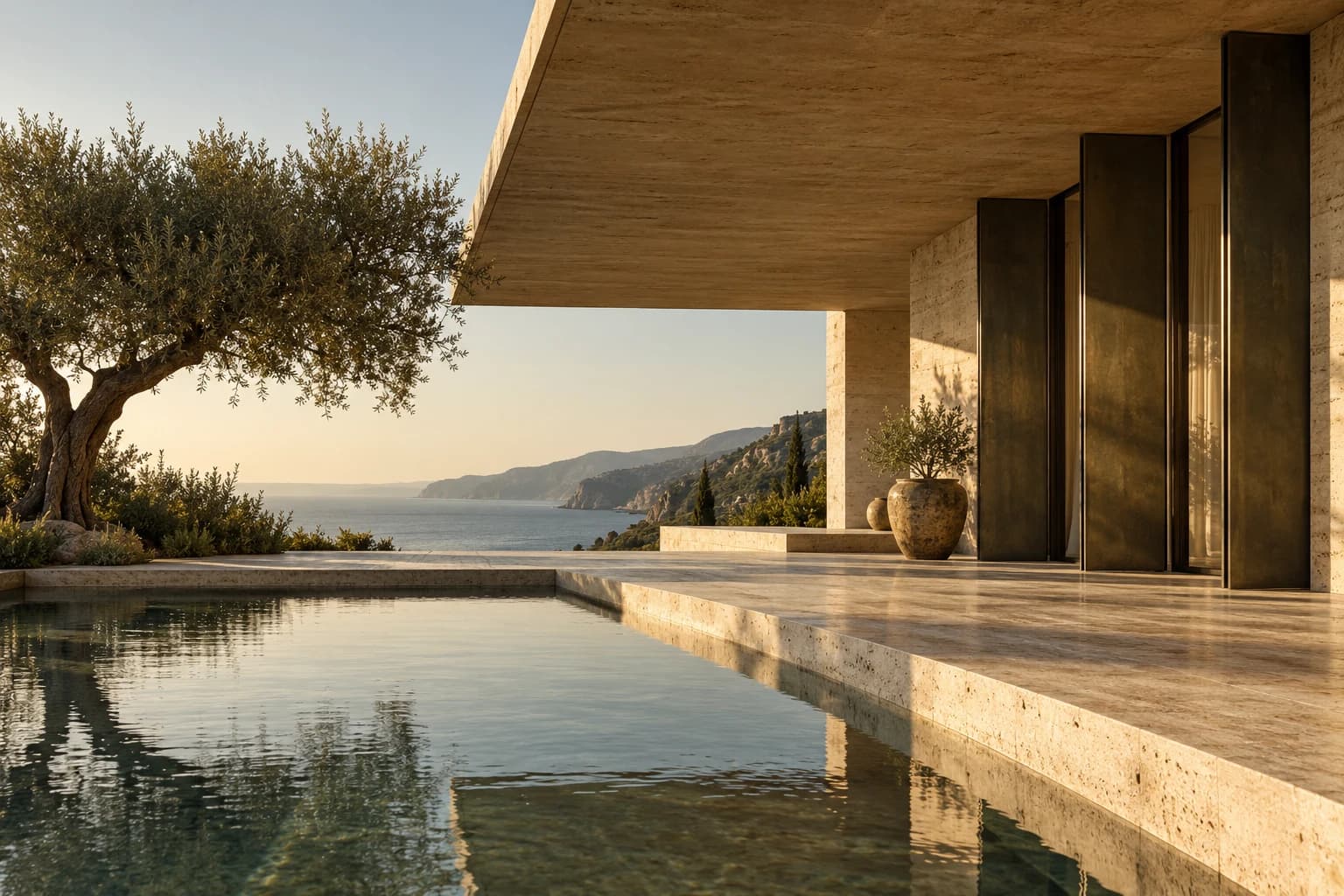
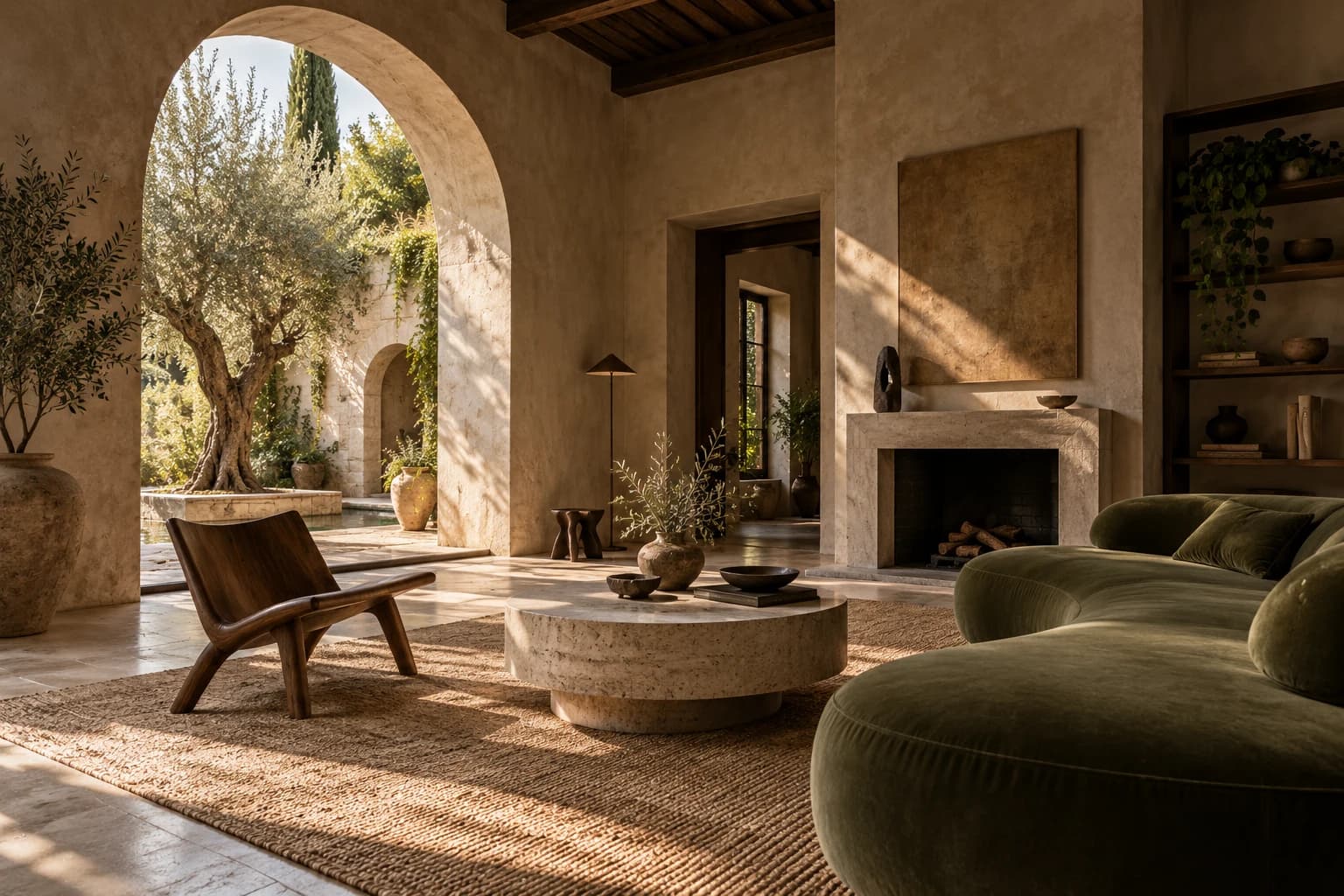
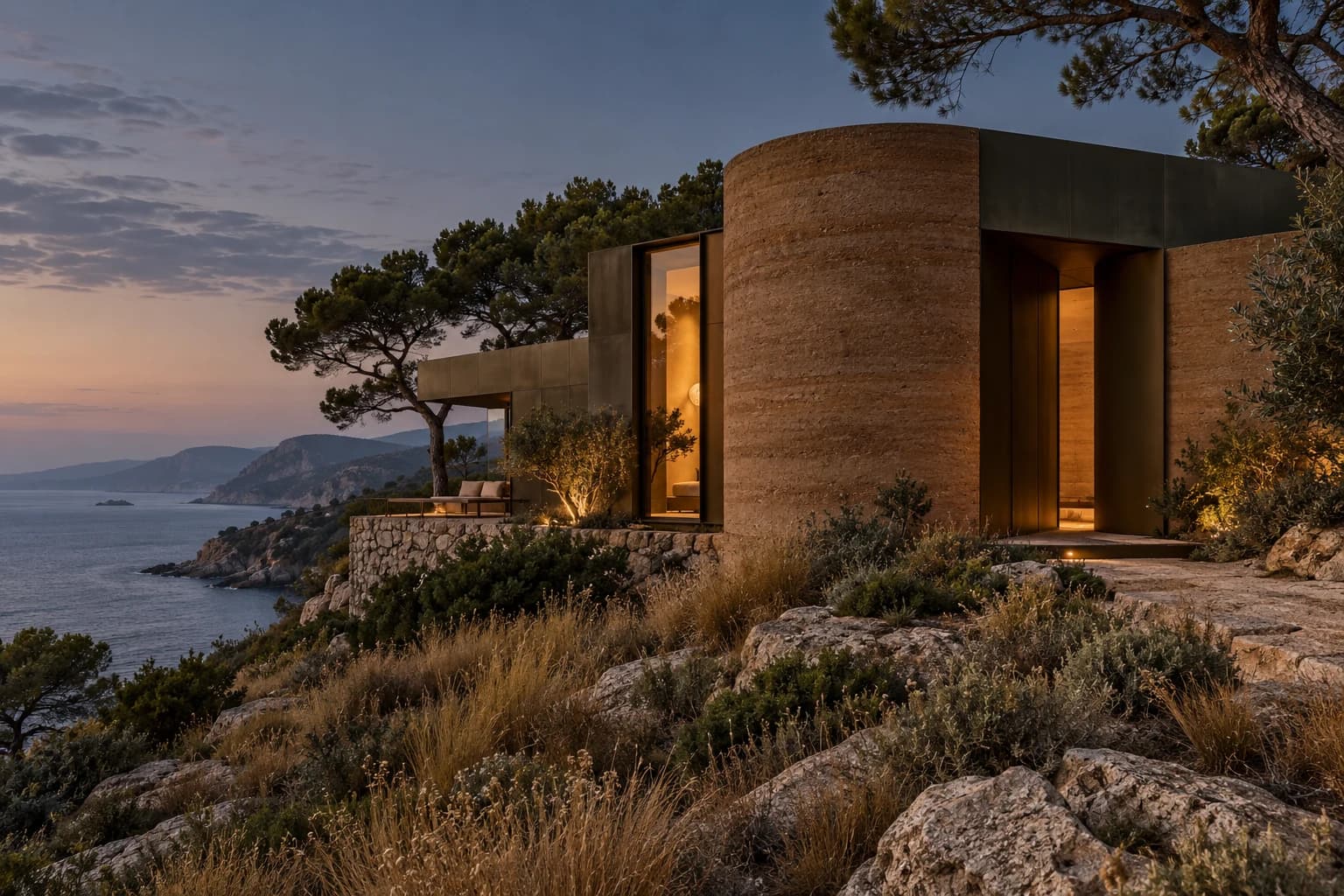
ARCHITECTURE · INTERIORS · OBJECTSWHAT MAKES A SPACESTAY WITH YOU?
STRUCTURE5 NARRATIVE CHAPTERS
PROJECTS3 FOCUSED STUDIES
DETAILS3 OBJECT + 3 MATERIAL STATES
ENQUIRYLOCAL BRIEF · NO STORAGE
01 / THE SITUATION
WHAT NEEDED TO CHANGE
A conventional portfolio grid could show attractive work, but it could not express the studio’s central idea: that light, material, objects and spatial rhythm are remembered as feeling. The challenge was to turn that subjective position into a clear digital experience without losing usability.
02 / THE RESPONSE
THE DECISIONS WE MADE
I structured the website as five chapters—studio, spaces, objects, materials and conversation. Full-screen scene changes establish rhythm, project studies open in focused overlays, objects become a tactile carousel, materials become selectable stories, and a persistent chapter index keeps the long-form experience navigable.
03 / THE RESTRAINT
WHAT WE CHOSE NOT TO DO
The studio and its projects are intentionally fictional, and the website says so plainly. The enquiry experience does not pretend to send data to a business: it creates a project brief that stays on the visitor’s device. Atmosphere is never used to disguise what the concept is or how it behaves.
DELIVERY, NOT JUST OUTPUT
WHAT EACH STAGE HAD TO RESOLVE.
The work is shown as a sequence of decisions and deliverables, including the constraints that shaped the finished experience.
01
CONCEPT + DISCLOSURE
The first task was to define a believable studio position without presenting invented projects as client work. The fictional status, privacy boundary and purpose of the experiment were written into the brief before the visual direction began.
Concept statement
Disclosure language
Audience journey
Experience principles
02
CHAPTER ARCHITECTURE
Studio, spaces, objects, materials and conversation were arranged as distinct chapters with one persistent navigation model. Each chapter needed its own pace while still contributing to one coherent argument about feeling and memory.
Five-chapter structure
Content hierarchy
Project-overlay flow
Navigation model
03
ART DIRECTION + INTERACTION
Image behaviour, typography, transitions and interface states were designed together. Project overlays, object states and material tabs were given different roles so interaction revealed the studio idea instead of simply adding movement.
Editorial art direction
Project-study system
Object carousel
Material-story states
04
BUILD + EXPERIENCE QA
The long-form experience was developed with responsive pacing, keyboard access and reduced-motion behaviour in mind. The private brief generator was kept entirely local and its data boundary was made visible before use.
Responsive front-end
Motion fallbacks
Accessibility pass
Local brief generator
EXPERIENCE ARCHITECTURE
FROM FIRST IMPRESSION TO INFORMED CONSIDERATION.
01
A QUESTION AS THE DOORWAY
The opening does not begin with services or credentials. It begins with a question—what makes a space stay with you?—and lets scale, image and pace establish the studio’s point of view.
02
FIVE DISTINCT CHAPTERS
Studio, spaces, objects, materials and conversation each have their own visual beat. Full-screen interludes make the journey feel authored without turning it into an opaque scroll experiment.
03
PROJECTS WITHOUT A NEW ROUTE
Three study overlays preserve context while creating enough focus for setting, scale, palette and narrative. Visitors can move between studies without losing their place in the main story.
04
OBJECTS AS TACTILE DETAILS
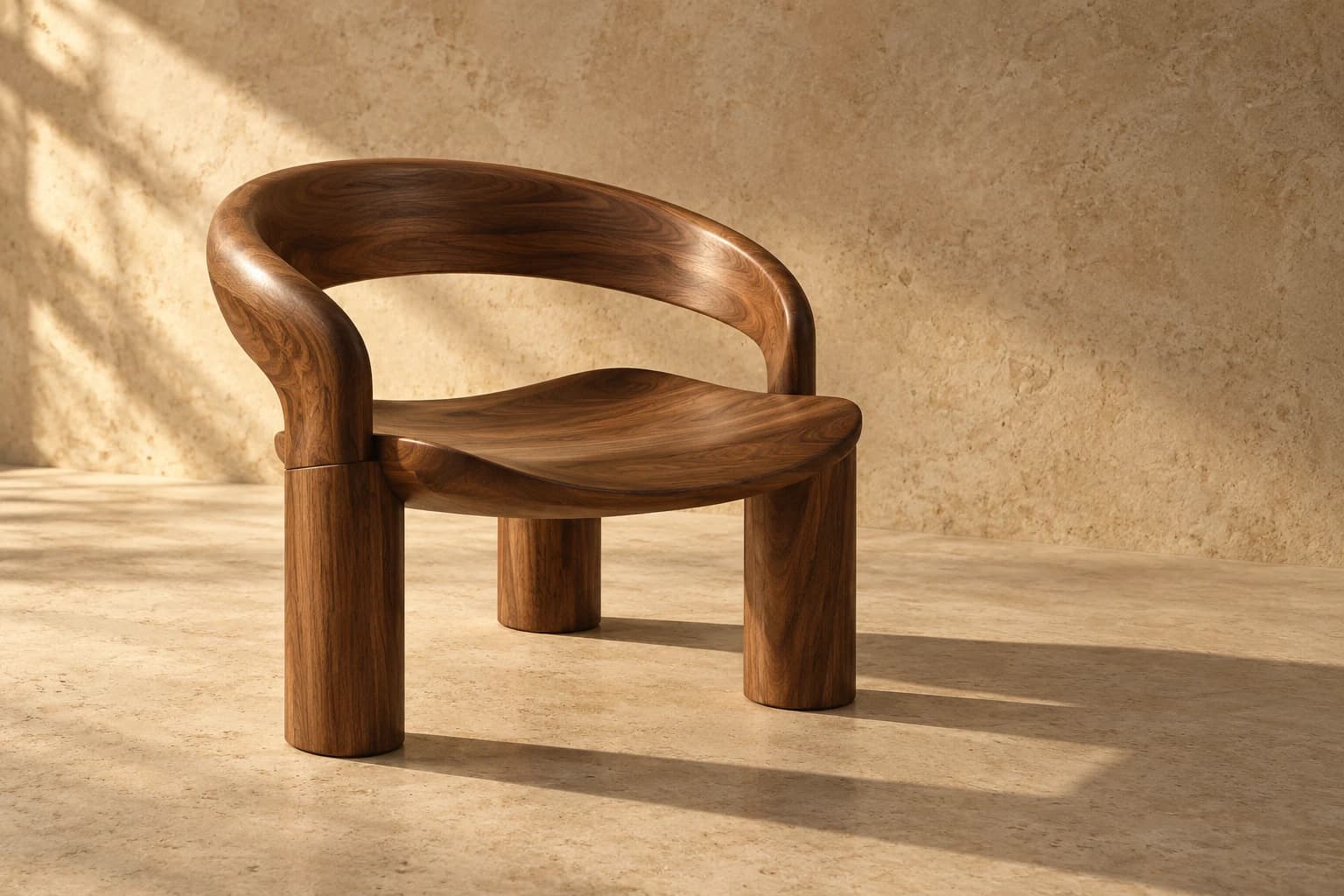
A compact carousel shifts from form to construction and use, letting one object reveal multiple ideas instead of becoming another thumbnail in a product grid.
05
MATERIALS MADE INTERACTIVE
Stone, timber and metal become selectable micro-stories. The interaction turns a static palette into a concise expression of the studio’s material philosophy.
06
A PRIVATE FIRST CONVERSATION
The closing brief builder creates a useful downloadable document locally. Nothing is transmitted or stored, and the interface explains that boundary before the visitor begins.
SCREEN-BY-SCREEN EXPERIENCE
THE WEBSITE, NOT JUST THE MOODBOARD.
Key interface moments from the live build, presented in sequence to show how the visual system changes across content, interaction and intent.
serein-studio.vercel.app
SEREIN STUDIO
ARCHITECTURE · INTERIORS · OBJECTS
WHAT MAKES A SPACE STAY WITH YOU?
An exploration of how we live.
01 / 06
01OPENING QUESTION
serein-studio.vercel.app
SEREIN STUDIO
CHAPTER I / THE STUDIO
LIGHT. FORM. FEELING.
The best spaces change how you feel.
02 / 06
02STUDIO POSITIONING
serein-studio.vercel.app
SEREIN STUDIO
01 / ARCHITECTURE
THE COURTYARD HOUSE
Alentejo, Portugal
03 / 06
03PROJECT STUDY OVERLAY
serein-studio.vercel.app
SEREIN STUDIO
ARC / NO. 01
A CURVE TO COME HOME TO.
Object detail · 01 / 03
04 / 06
04OBJECT CAROUSEL
serein-studio.vercel.app
SEREIN STUDIO
CHAPTER IV / THE NATURE OF THINGS
LET THE MATERIAL SPEAK.
Stone · timber · metal
05 / 06
05MATERIAL STORY TABS
serein-studio.vercel.app
SEREIN STUDIO
A FIRST CONVERSATION
MAKE ROOM FOR AN IDEA.
A private project brief saved only to your device.
How should we call you?Architecture
06 / 06
06LOCAL BRIEF GENERATOR
S · SEREIN
ARCHITECTURE · INTERIORS · OBJECTSWHAT MAKES A SPACESTAY WITH YOU?
PROJECT SCOPE
01 / EXPERIENCE CONCEPT
02 / EDITORIAL ART DIRECTION
03 / CONTENT + UX WRITING
04 / INTERACTION DESIGN
05 / FRONT-END DEVELOPMENT
RISKS + RESPONSES01
FICTION CAN BE MISTAKEN FOR PROOF
A polished studio presentation can imply real commissions. The case study and live concept identify the practice and projects as fictional so the work demonstrates design thinking without borrowing credibility.
02
IMAGERY CAN OVERRIDE THE IDEA
Atmospheric photography could reduce the site to another visual moodboard. Chapter copy, captions and focused project information keep the imagery attached to a clear studio position.
03
A LONG JOURNEY CAN LOSE ORIENTATION
Five full-screen chapters introduce depth but also navigation risk. A persistent chapter index, strong transitions and focused overlays help visitors understand both location and progress.
04
AN ENQUIRY DEMO CAN CREATE FALSE EXPECTATIONS
The closing brief experience creates a useful artefact but does not contact a studio. It states that nothing is transmitted or stored and keeps every input on the visitor’s device.
LESSONS + NEXT STEPS01
A POINT OF VIEW NEEDS STRUCTURE
The idea of spaces being remembered as feeling became persuasive only when every chapter translated it into a different kind of evidence: projects, objects, materials and conversation.
02
MOTION WORKS BEST AS CONTINUITY
The strongest transitions explain how one chapter gives way to the next. Decorative movement was less useful than maintaining context between the main narrative and focused studies.
03
A COMMISSIONED VERSION NEEDS REAL CONTENT EARLY
For a working studio, project permissions, photography readiness and service language should be resolved before interaction detail. Real material would determine the final chapter lengths and launch sequence.
The finished responsive concept works as both a believable studio portfolio and an interaction study. It combines a cinematic opening, five navigable chapters, three project studies, three object states, three material stories and a local brief generator in one coherent system.